Online Database of Chemicals from Around the World

Hexamethylditin
[CAS 661-69-8]

List of Suppliers
Hangzhou Verychem Science And Technology Co., Ltd. China
www.verychem.com
+86 (571) 8816-2785
+86 13606544505
+86 (571) 8816-2787
lucy@verychem.com
Chemical manufacturer since 2004
chemBlink Massive supplier since 2021
BOC Sciences USA
www.bocsci.com
+1 (631) 485-4226
+1 (631) 614-7828
info@bocsci.com
Chemical manufacturer
chemBlink Standard supplier since 2010
Ereztech LLC USA
www.ereztech.com
+1 (888) 658-1221
sales@ereztech.com
Chemical distributor since 2010
chemBlink Standard supplier since 2011
Intatrade Chemicals GmbH Germany
www.intatrade.de
+49 (3493) 605-465
+49 (3493) 605-470
sales@intatrade.de
Chemical distributor
chemBlink Standard supplier since 2011
Pure Chemistry Scientific Inc USA
www.purechems.com
+1 (888) 588-9418
+1 (617) 206-9595
sales@purechems.com
Chemical manufacturer since 2004
chemBlink Standard supplier since 2014
Infinity Scientific China
www.infsci.com
+86 400-106-2016
+86 18500163824
biz2@infsci.com
QQ Chat
Chemical manufacturer since 2014
chemBlink Standard supplier since 2015
Hangzhou Leap Chem Co., Ltd. China
www.leapchem.com
+86 (571) 8771-1850
market19@leapchem.com
QQ Chat
Chemical manufacturer since 2006
chemBlink Standard supplier since 2015
Dalchem Russia
www.dalchem.com
+7 (8312) 753-772
+7 (8312) 750-799
dregichy@dalchem.com
Chemical manufacturer since 1997
Strem Chemicals, Inc. USA
www.strem.com
+1 (978) 499-1600
+1 (978) 465-3104
info@strem.com
Chemical manufacturer
Anvia Chemicals, LLC USA
www.anviachem.com
+1 (414) 534-7845
+1 (414) 762-5539
sales@anviachem.com
Chemical manufacturer

Identification
ClassificationOrganic raw materials >> Organometallic compound >> Organotin
NameHexamethylditin
SynonymsHexamethyldistannane
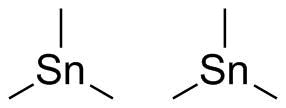
Molecular StructureHexamethylditin molecular structure (CAS 661-69-8)
Molecular FormulaC6H18Sn2
Molecular Weight327.59
CAS Registry Number661-69-8
EC Number211-549-2
SMILESC[Sn](C)C.C[Sn](C)C
Properties
Density1.58
Melting point23-24 °C
Boiling point182 °C (756 mmHg)
Refractive index1.537-1.541
Flash point62 °C
Safety Data
Hazard Symbolssymbol symbol symbol   GHS02;GHS06;GHS09 DangerGHS02;  Details
Risk StatementsH226-H300-H310-H330-H400-H410  Details
Safety StatementsP210-P233-P240-P241-P242-P243-P260-P262-P264-P270-P271-P273-P280-P284-P301+P316-P302+P352-P303+P361+P353-P304+P340-P316-P320-P321-P330-P361+P364-P370+P378-P391-P403+P233-P403+P235-P405-P501  Details
Hazard Classification
up    Details
HazardClassCategory CodeHazard Statement
Acute toxicityAcute Tox.2H330
Acute toxicityAcute Tox.2H300
Chronic hazardous to the aquatic environmentAquatic Chronic1H410
Acute toxicityAcute Tox.1H310
Acute hazardous to the aquatic environmentAquatic Acute1H400
Acute toxicityAcute Tox.2H310
Transport InformationUN 3146
SDSAvailable
up chemBlink Chemical Story
Hexamethylditin looks like a molecule with an unusual bond at its center: two trimethyltin groups joined directly through tin, Me3Sn-SnMe3. That Sn-Sn bond is the key to its synthetic personality. Rather than being a stable endpoint, it can serve as a source of organotin fragments that are transferred to other molecules.

Organotin chemistry became especially important because carbon-tin bonds participate in the Stille cross-coupling reaction. In a Stille coupling, an organostannane transfers an organic group to palladium, which then forms a new carbon-carbon bond with an electrophilic partner such as an aryl or vinyl halide. Organotin compounds are often tolerant of many functional groups and can be isolated and handled before coupling, which made the Stille reaction a powerful tool for constructing complex molecules.

Hexamethylditin occupies an interesting upstream position in this chemistry. Palladium- or other metal-mediated reactions can cleave its Sn-Sn bond and use it to install trimethylstannyl groups onto aryl, vinyl, or heteroaryl systems. The newly formed organostannane can then participate in a subsequent cross-coupling. In some tandem sequences, hexamethylditin effectively helps convert one reactive handle into a temporary tin-bearing intermediate that is consumed in the next bond-forming step.

A 1995 tandem Stille study illustrates this strategy. A pyridyl triflate was first stannylated through hexamethylditin, generating a labile pyridylstannane in situ; that intermediate then cross-coupled selectively with an aryl bromide. Instead of isolating every organotin intermediate, the chemistry used the Sn-Sn reagent as a relay station for carbon-carbon bond construction.

There is, however, an important price for this utility. Organotin compounds can be highly toxic, and hexamethylditin is classified as acutely toxic and hazardous to the aquatic environment. Modern synthetic planning therefore weighs its powerful reactivity against worker exposure, waste treatment, residual tin contamination, and the availability of less toxic alternatives such as boron- or zinc-based coupling partners. This is one reason Stille chemistry, although still valuable in difficult cases, is no longer the automatic first choice for every cross-coupling problem.

Hexamethylditin is therefore memorable as both a reagent and a lesson in reaction design. Its central Sn-Sn bond makes it an efficient donor of organotin functionality, enabling multistep and tandem coupling strategies. At the same time, its toxicity reminds chemists that a reaction cannot be judged by yield alone; the environmental and process costs of the reagent also matter.

References:
1. NIST Chemistry WebBook, Hexamethylditin, CAS 661-69-8.
2. PubChem, Hexamethylditin, CID 6327618.
3. Kelly T.R. et al. Tetrahedron Lett. 1995, 36, 9085-9088. DOI: 10.1016/0040-4039(95)01985-Q.
4. Stille J.K. Angew Chem Int Ed Engl. 1986, 25, 508-524.

Market Analysis Reports
Related Products
2,2,4,4,5,5-Hex...  2,2,4,4,6,6-Hex...  N4,N4,N5,N5,2,2...  2,2,4,4,6,6-Hex...  (6R,8S)-2,2,4,4...  1,1,1,5,5,5-Hex...  Hexamethyldisil...  Hexamethyldisil...  Hexamethyldisil...  Hexamethyldista...  1,1,3,3,5,5-Hex...  1,1,3,3,5,5-Hex...  (4E,8E,12E,16E)...  2,2,4,9,11,11-H...  5-(N,N-Hexameth...  N,N'-Hexamethyl...  N,N'-Hexamethyl...  N,N'-Hexamethyl...  N,N'-Hexamethyl...  1,1'-Hexamethyl...